WOOD
Wood has entered my practice twice, through two entirely different doors, and the logic behind each is worth explaining.
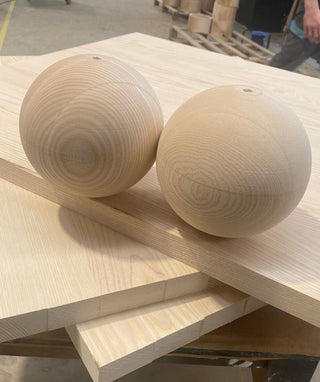
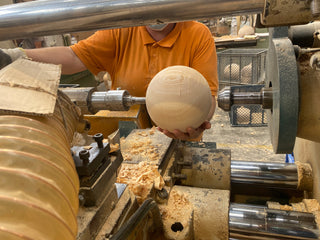
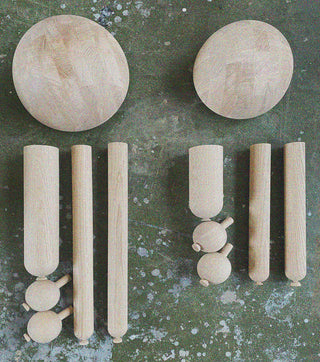
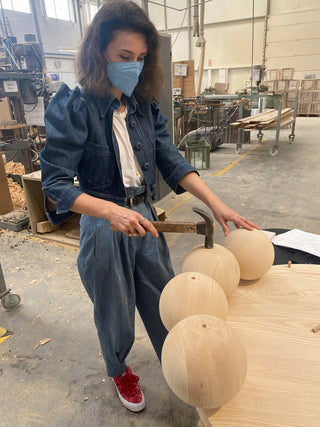
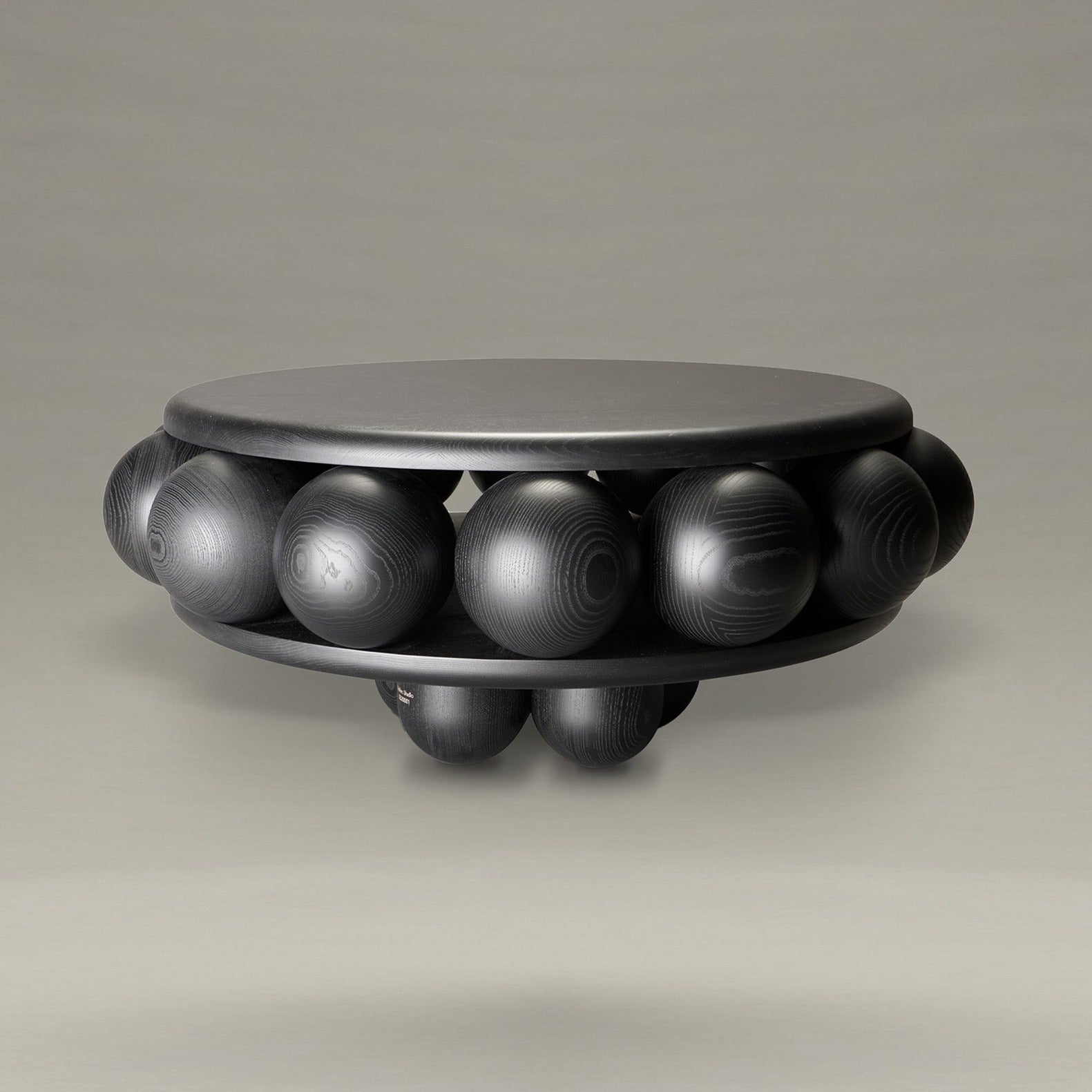
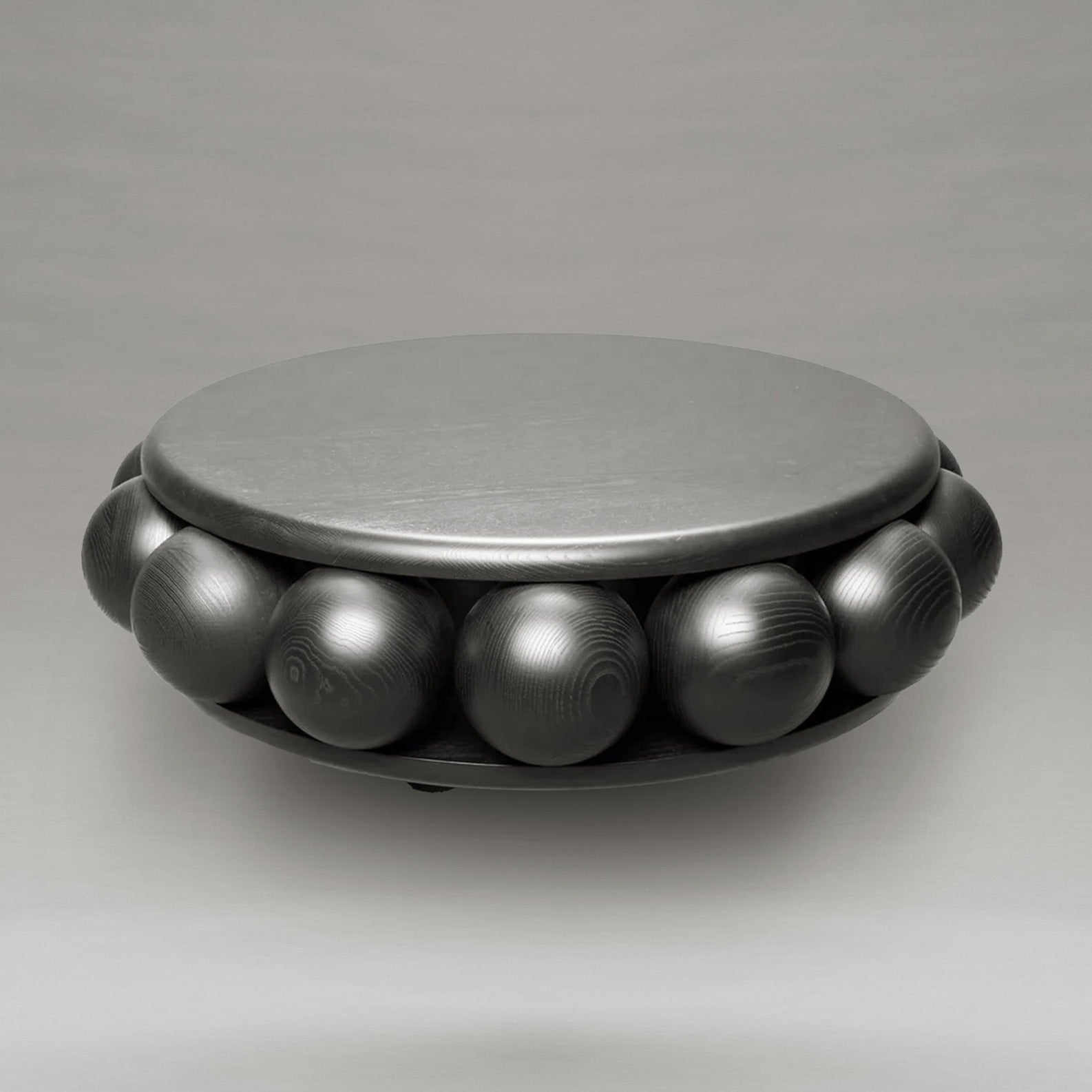
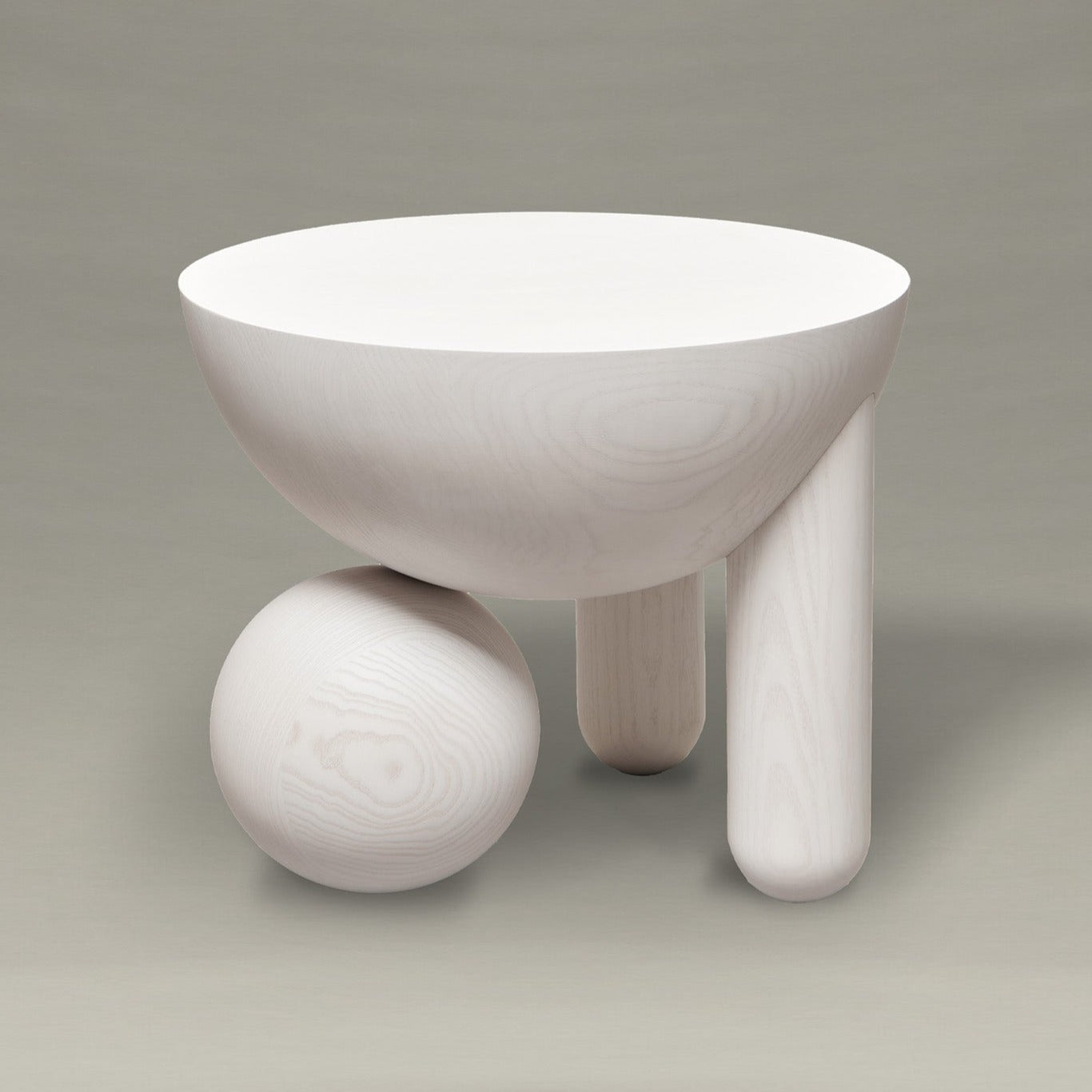
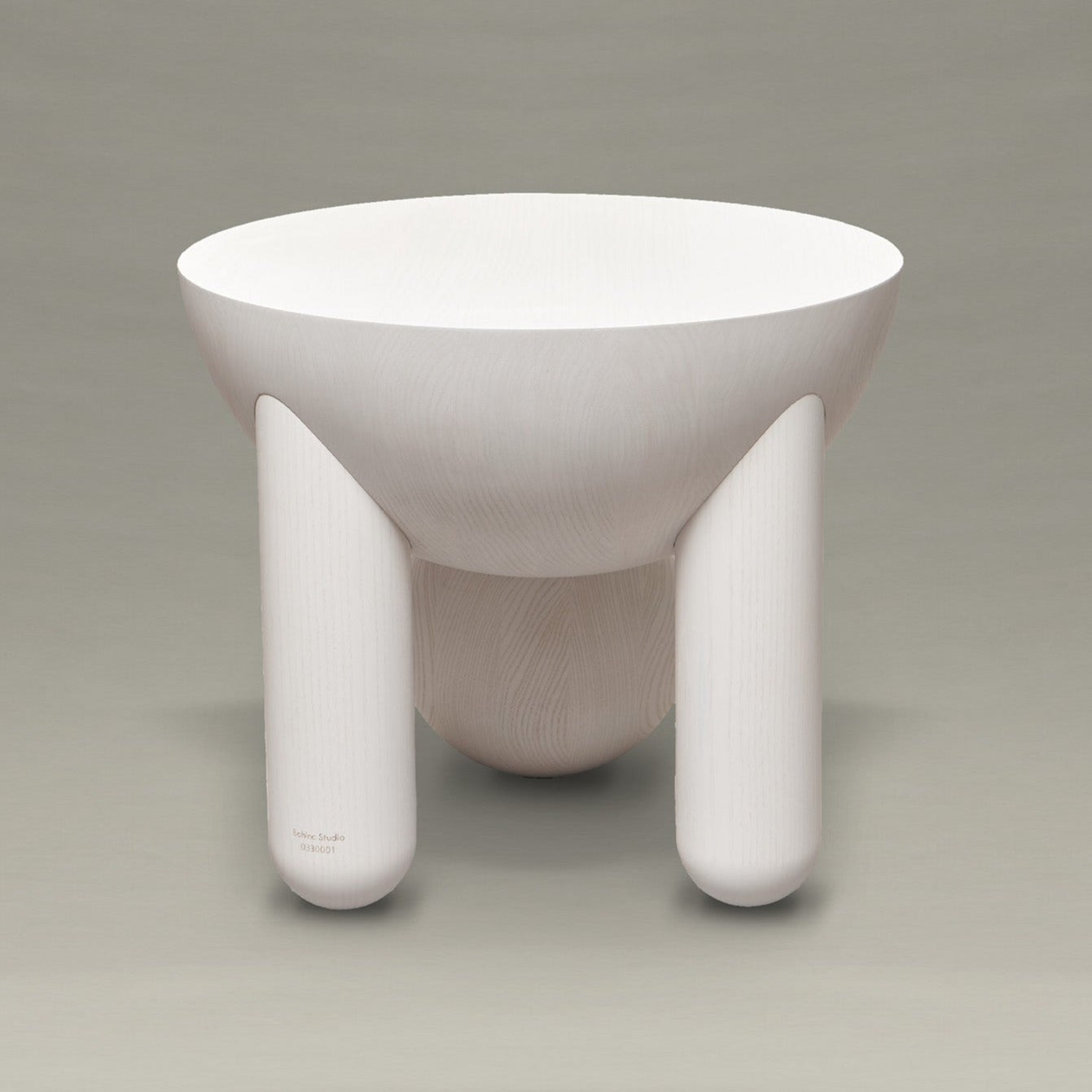
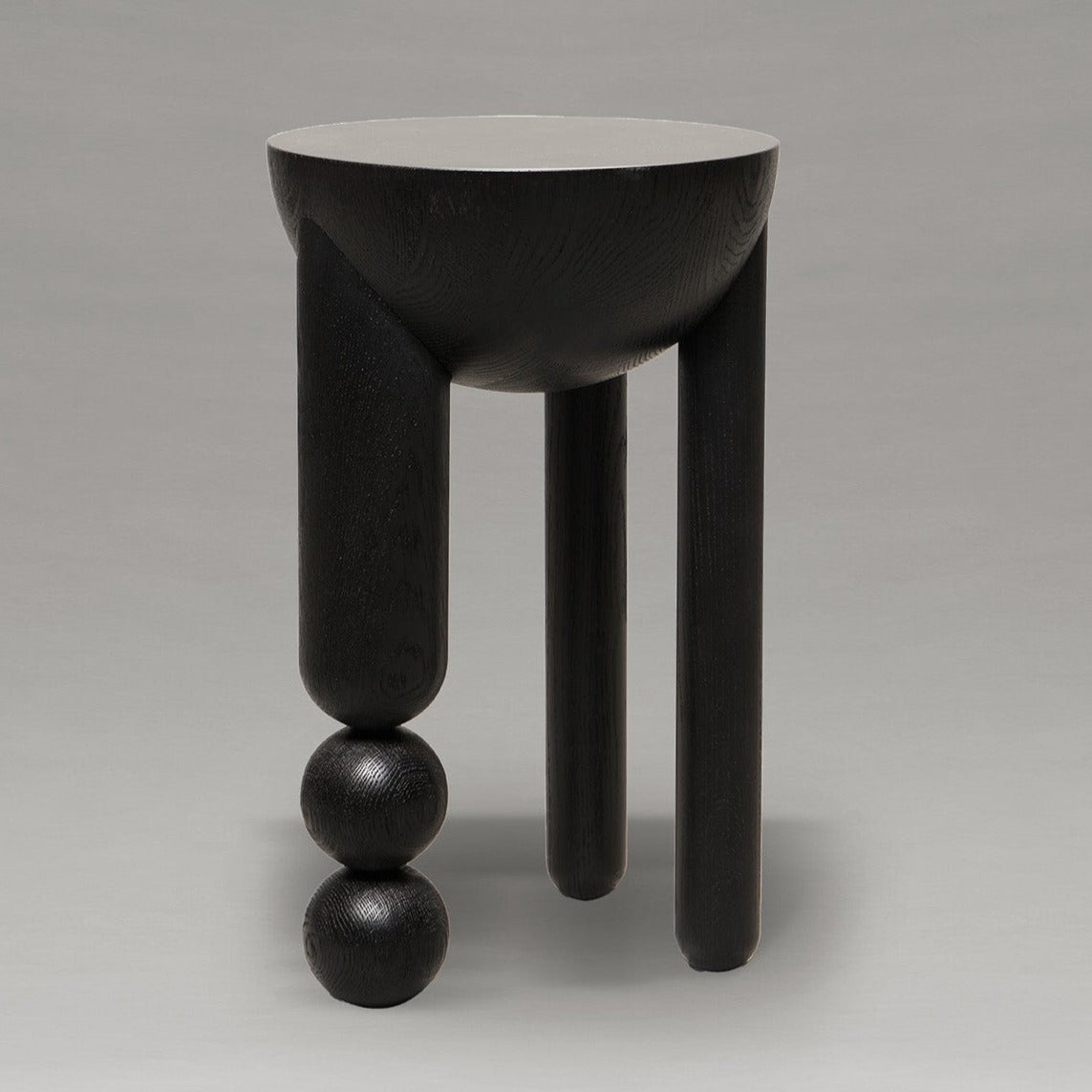
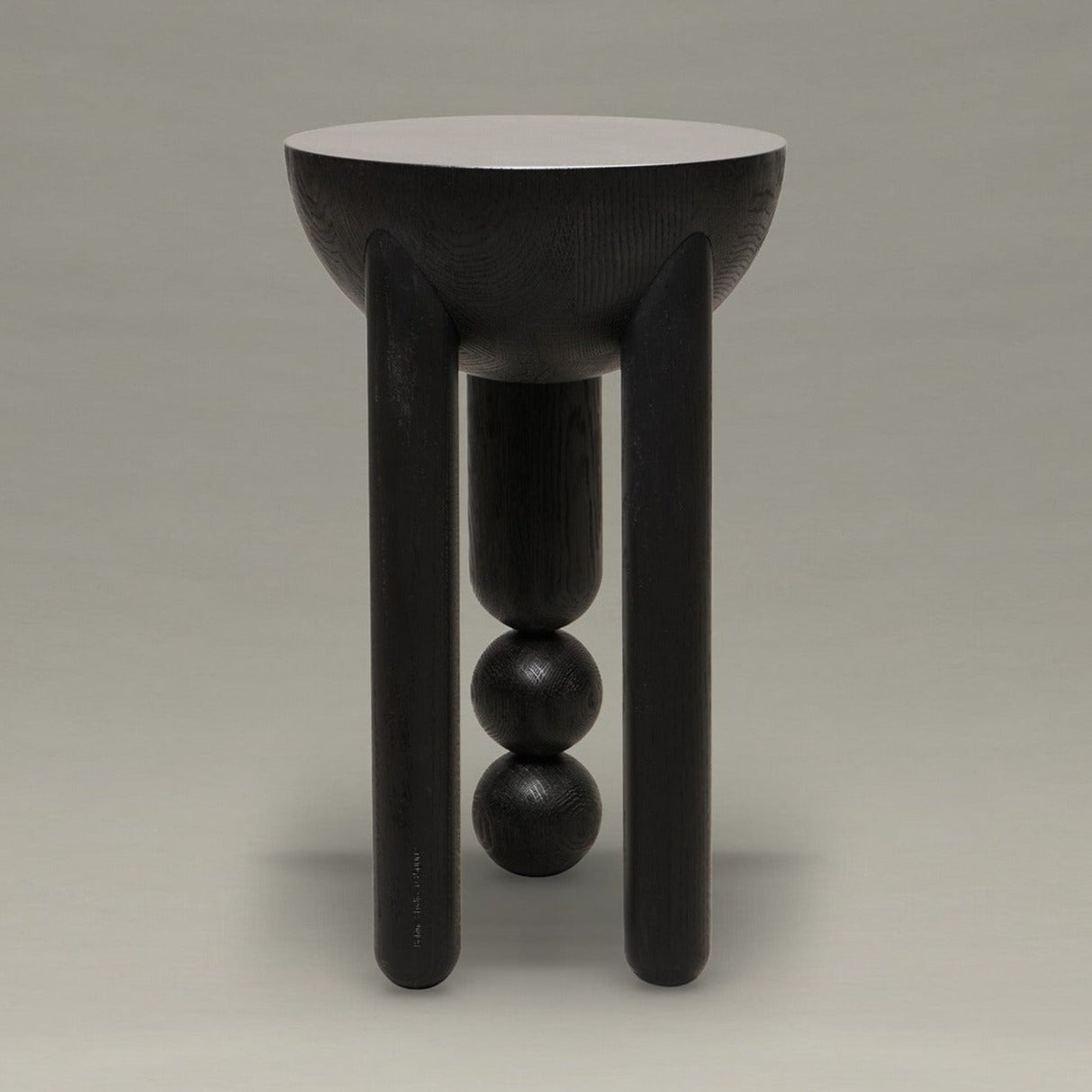
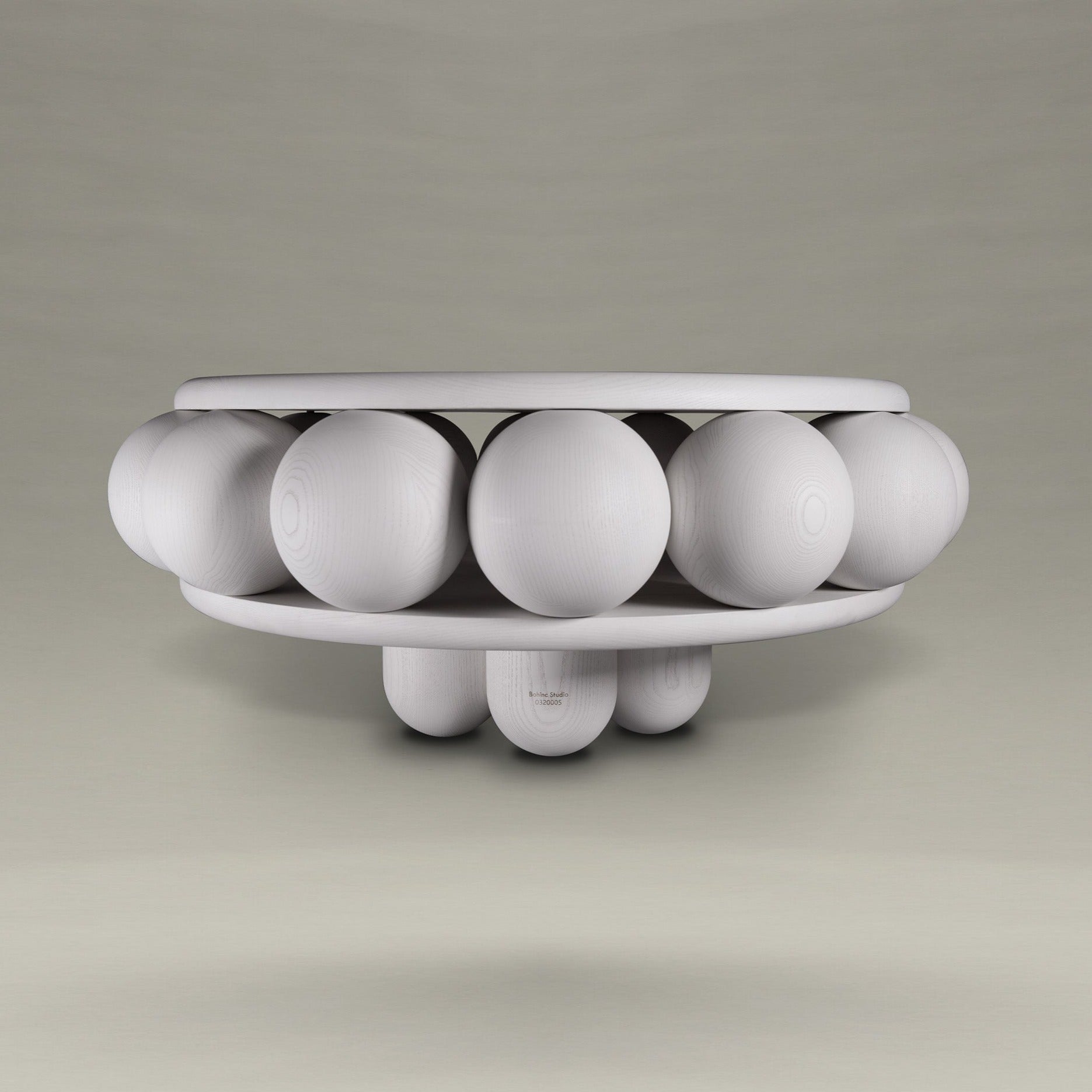
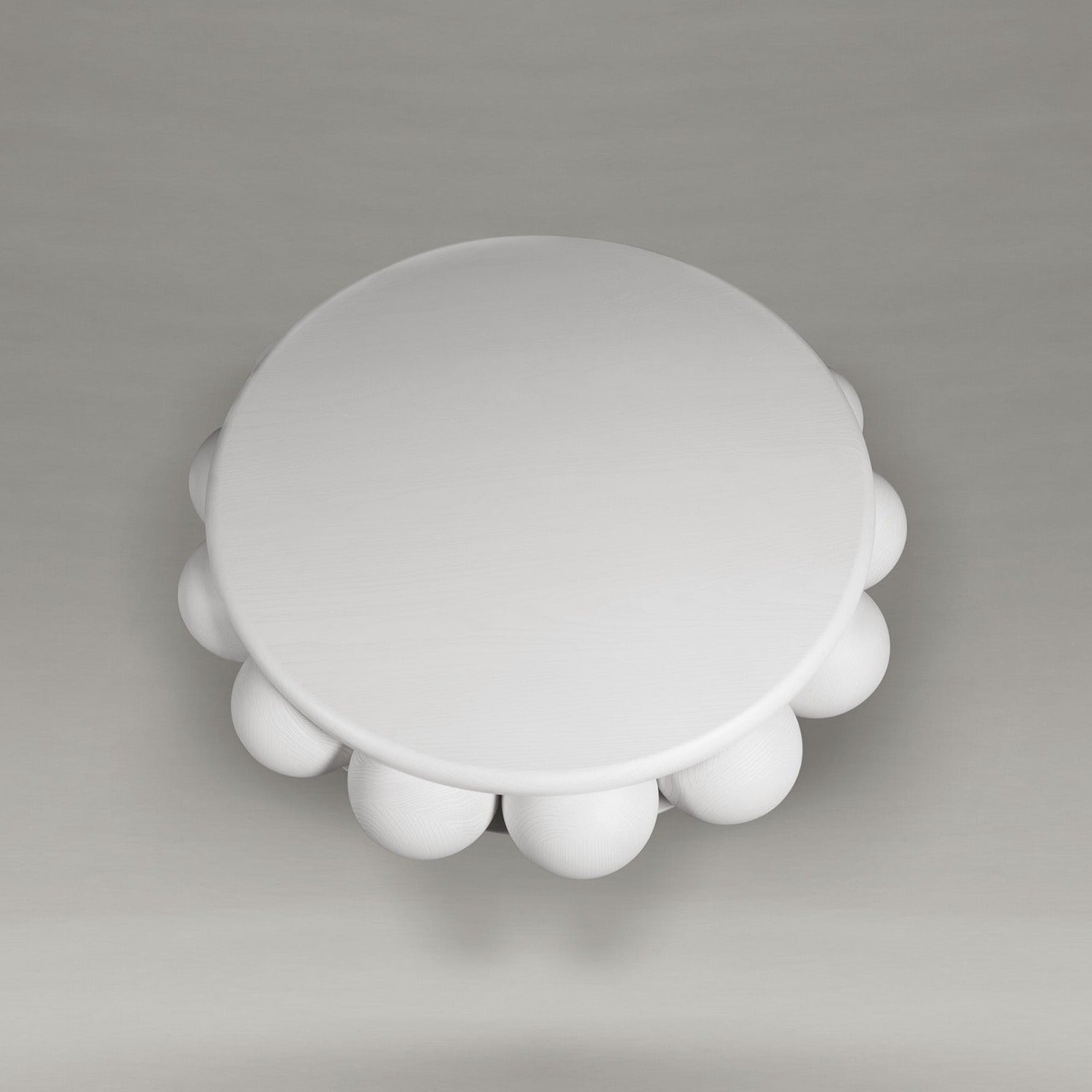
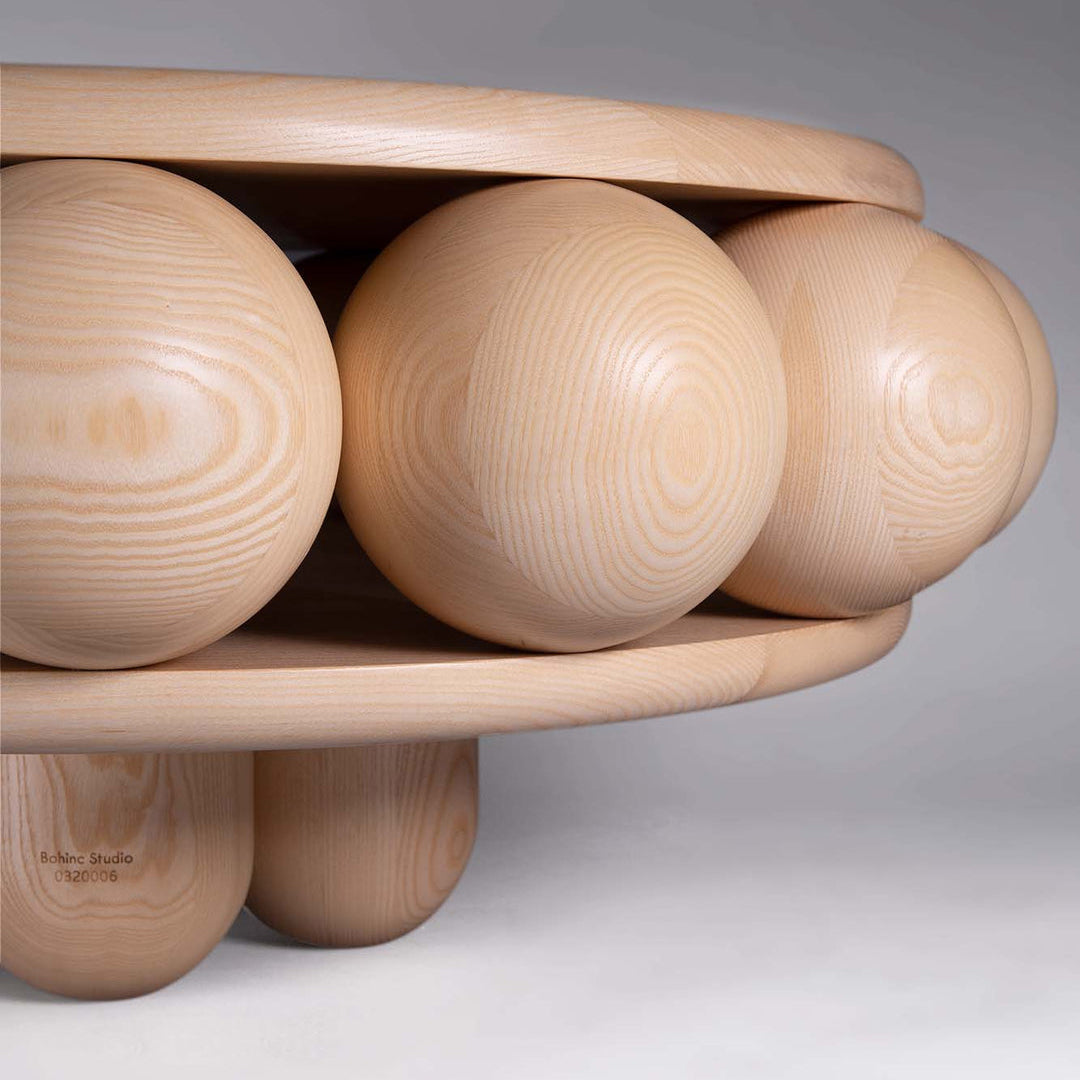
The first was through the Afternoon Tea collection. The Profiterole and Macaroon tables are made from stained ash and 3D-milled into the spherical, dessert-like forms that give the collection its character. Fourteen spheres clustered like berries beneath a round table top; the rounded legs of the Profiterole sitting beneath its cupped surface like something that has been dropped and found its own balance. The forms are the point, not the wood. Ash is the material that allows these shapes to exist at this scale without the weight of stone. The 3D milling process is what makes them possible at all: compound curves, spherical structures, forms that resist the grain in ways that traditional hand-carving cannot. The wood serves the geometry.
The second encounter with wood was very different. The Dark Woods Table, part of the Anima collection (2025), is made from solid mahogany and crafted in Portugal using a combination of 5D laser cutting and hand-chiselling. The result is a table whose floating surfaces rest on formations that read as geological, as though they have been carved by something much older and slower than a milling machine. The twin peaks of the surface echo the same silhouette as the Anima seating: soft curves with a central dip, a landscape rather than a piece of furniture. The mahogany is dark, dense, and present in a way that stained ash is not. Here, the grain is part of the work.
What is different between the two approaches is the relationship between the making process and the form. With the Afternoon Tea pieces, 3D milling is how you achieve spherical precision in wood — the process produces the form cleanly and consistently. With the Dark Woods Table, the 5D laser cutting produces the primary volume, but the hand-chiselling is where the piece becomes itself. The chisel marks are not removed. The surface reads as worked rather than manufactured. The table is a limited edition of 8 + 2 pieces, made to order in Portugal (790 × h490 × 570mm), and is represented exclusively by StudioTwentySeven.
Both approaches are honest about what they are. Neither pretends the wood is something other than itself. But they ask very different things of it.