MARBLE
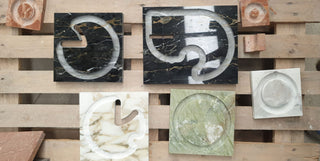
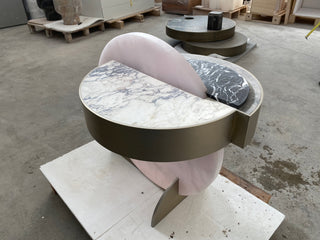
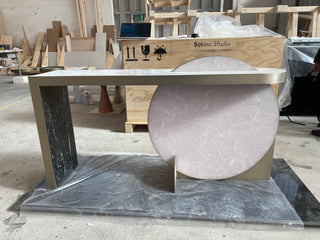
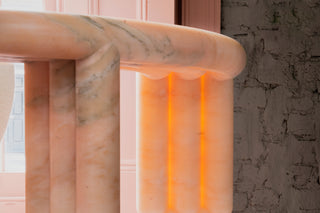
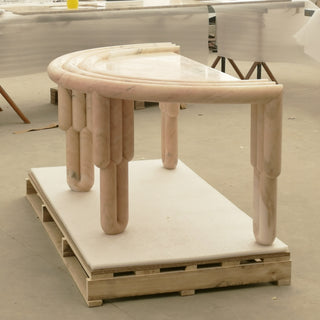
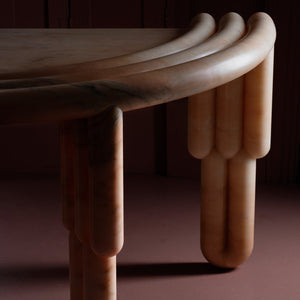
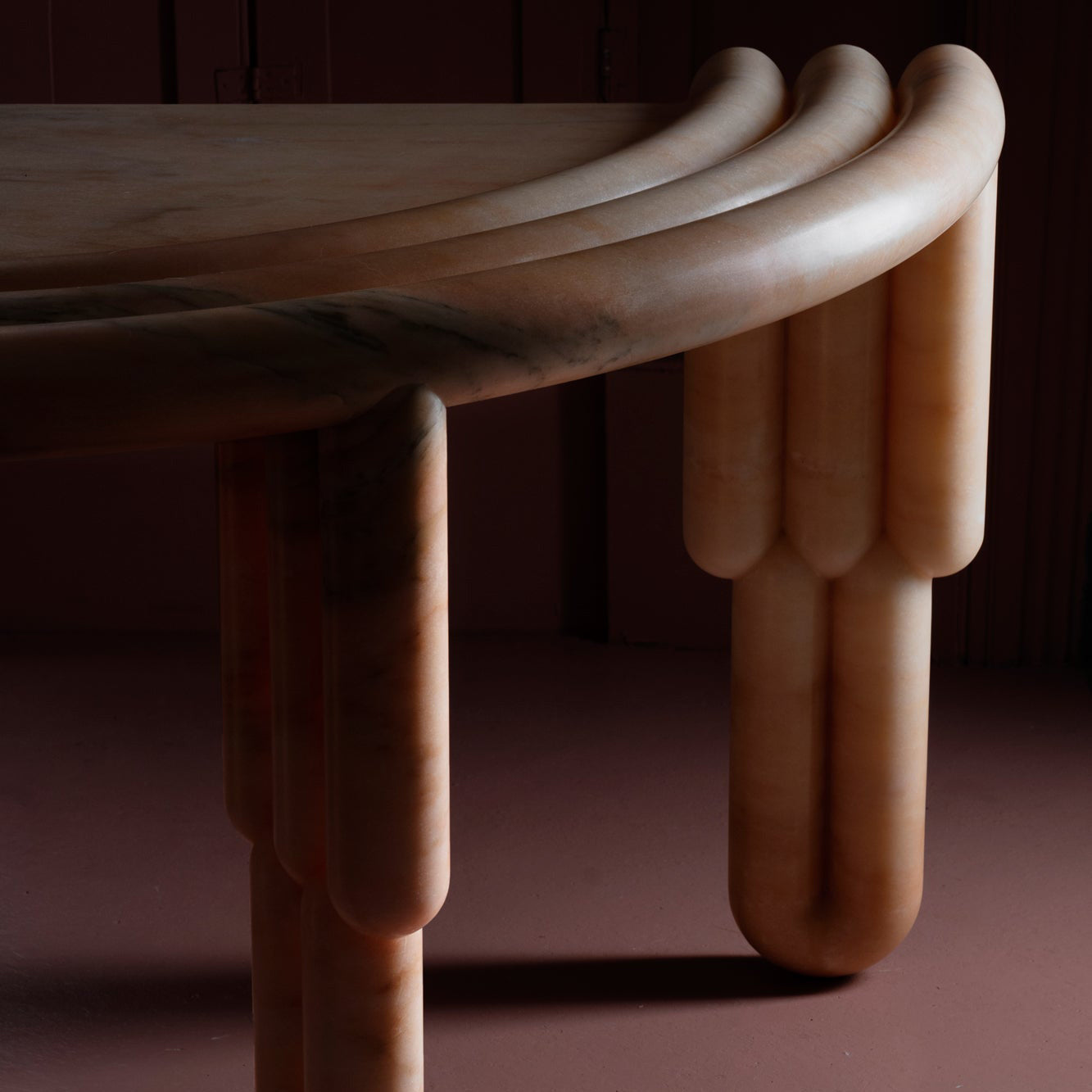
Marble appears in more Bohinc Studio collections than any other stone — the Collision, Fallen Empire, Afternoon Tea, and Lunar collections each use it differently, and in each case the specific character of the stone is a design decision rather than a given. I choose stone individually, looking at veining direction, porosity, and surface quality before committing to a slab. What follows is a direct account of how marble behaves - its limitations, its resistances, and the qualities that make variation not a flaw but the point.
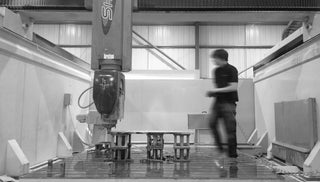
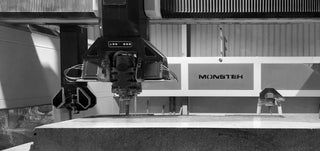
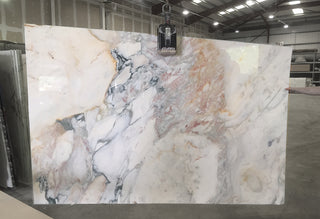
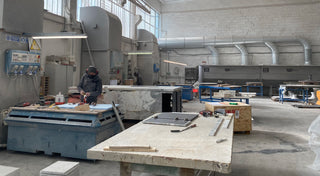
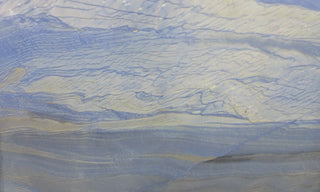
Marble is a stiff material to work with of course – you can’t pour it or mould it or bend it, so all you can do is carve it or shape it, whether you do that by computer or by milling or by hand – or the other way is working with a flat sheet. It is very hard and very brittle, so when you carve it, there’s lots of potential to go wrong – you hit a vein and part of it falls away. Marble is often very porous. I find with lot of my favourite stones, the fact that they are porous is their weak point, but that also makes them very beautiful. One of the problems you face is when people want something exactly the same: there is no exactly the same with marble. Every single stone is completely different. It can vary a lot. But that’s also the beauty of it, that’s what makes it special. It will never be exactly the same as you see in the picture. It depends on which part of the slab you cut from as well – whether it is the corner or in the middle. I find that beautiful